
Cool roofing for a controlled heat balance.
Reflective membranes and coatings reduce solar heat gain at the roof surface — cutting cooling demand and extending material life.
- Coating cost
- $2.50–$5 / sq ft
- Adds
- 10–15 years
- Best in
- Hot, sunny climates
What makes a roof "cool"
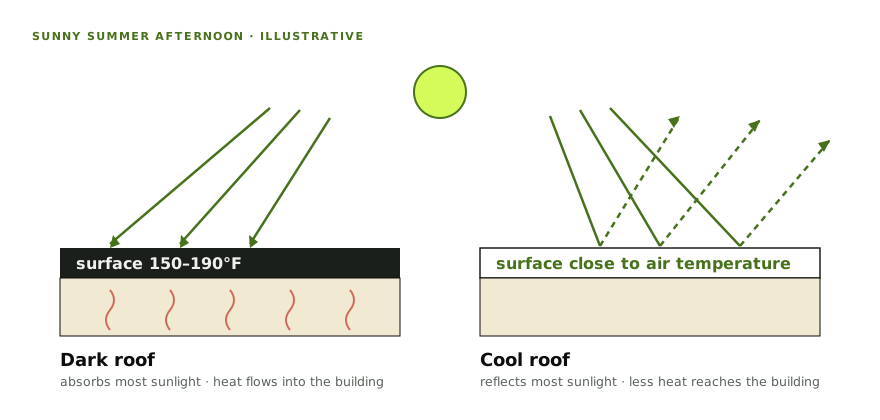
A cool roof reflects most of the sunlight that hits it and quickly sheds the heat it does absorb. Two numbers describe it: solar reflectance (the share of sunlight reflected) and thermal emittance (how readily the surface radiates heat away). Together they give the Solar Reflectance Index (SRI). Independent ratings come from the Cool Roof Rating Council (CRRC), which publishes both initial values and values after three years of weathering — the aged numbers are the ones that matter.
On a sunny summer afternoon a dark roof can reach 150–190°F. A clean white roof stays within a few tens of degrees of the air temperature. That difference flows straight into the building's cooling load, the life of the roofing materials and the comfort of top floors.
Three ways to get a cool roof
- White single-ply membrane — TPO or PVC. The natural choice for a new roof or replacement.
- Roof coating (restoration) — silicone, acrylic or urethane applied over an existing, sound roof: membranes, modified bitumen, built-up roofs and metal. It seals, reflects and adds typically 10–15 years of life, often without tear-off.
- Cool-colored metal — standing seam with reflective pigments that bounce infrared light even in mid-tone colors.
Where cool roofs pay back
The benefit is largest where three things meet: a hot, sunny climate, a big roof relative to floor area (single-story warehouses, retail, gyms, plants) and air-conditioned space directly below. Owners typically see lower peak cooling demand, smaller HVAC run times and cooler rooftop equipment. In cold climates, the winter heating penalty can offset part of the summer gain, and adding insulation usually delivers more. We look at both before recommending one.
Energy codes
Cool roofs are no longer only a choice. Energy codes in warmer climate zones — including ASHRAE 90.1 and the IECC for low-slope commercial roofs, and California's Title 24 — set minimum aged reflectance and emittance values, or an equivalent trade-off, when a roof is replaced. We confirm the requirement for your location during design, along with the insulation level that a re-roof triggers; the U.S. Department of Energy tracks which code each state has adopted on energycodes.gov.
Coatings: when restoration is the right call
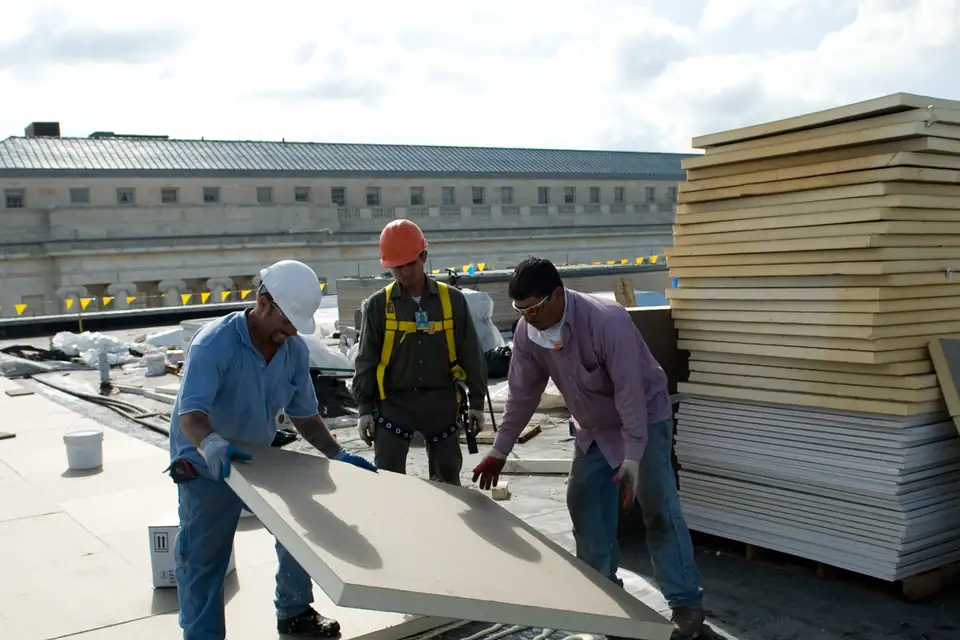
A coating is not a fix for a failed roof. It works when the existing roof is still largely dry, well attached and structurally sound. The process:
- Infrared or capacitance moisture survey and core cuts to find wet insulation.
- Remove and replace wet areas; repair seams, flashings and blisters.
- Clean (pressure-wash) and prime as the substrate requires.
- Reinforce seams and penetrations with fabric or mastic.
- Apply the coating at the specified thickness, verified by wet-film readings.
Many manufacturers offer 10- to 20-year warranties depending on thickness, and a coated roof can often be recoated at the end of that term instead of torn off.
Keeping it cool
Dirt, biological growth and ponding water reduce reflectance over time. Periodic cleaning and good drainage keep a cool roof performing close to its aged rating — part of any maintenance plan we run.
Cool roofing: common questions.
How much cooler is a cool roof?
On a sunny summer day a dark roof can reach 150–190°F, while a clean, highly reflective white roof stays within a few tens of degrees of the air temperature. The effect on the building depends on insulation, but single-story buildings with large roofs feel it most.
Do cool roofs save energy in cold climates?
Less. The summer cooling savings are partly offset by a small winter heating penalty, and snow cover reduces the difference. In cold climates, a re-roof's insulation upgrade usually saves more energy than roof color.
How long does a roof coating last?
Typically 10–15 years for a properly applied silicone or acrylic system, with warranties of 10 to 20 years depending on thickness. At the end of its term a coated roof can often be cleaned and recoated rather than torn off.
Can any roof be coated?
No. The roof must be largely dry, well attached and structurally sound. A moisture survey comes first; wet insulation must be cut out and replaced. Coating over a saturated roof traps water and hides the problem until it is more expensive.
Is a cool roof required by code?
In many warm climate zones, yes, when a low-slope commercial roof is replaced — energy codes set minimum aged reflectance and emittance or an equivalent trade-off. Requirements vary by state and city, so we confirm them during design.
Related systems and guides.
Is your roof running hot?
We can survey an existing roof and tell you whether a coating, a white re-roof or more insulation will do the most for the building.