Walk across almost any flat commercial roof built in the last thirty years and you will be standing on one of three single-ply membranes: TPO, PVC or EPDM. All three are proven, all three can last 20 to 30 years, and all three are sold by reputable manufacturers with long warranties. The differences are in how the seams are made, what the membrane tolerates, how it reflects the sun and how it ages — and those differences decide which one belongs on your building.
The short answer
- TPO is the default for large, low-slope roofs in warm and mixed climates: heat-welded seams, white and reflective, and usually the best value per square foot.
- PVC is the choice where grease, oils or chemicals reach the roof — restaurants, food processing and many plants — and where maximum seam strength and fire performance matter.
- EPDM is the flexible, time-tested rubber roof. It shines in cold climates and on budget-driven projects, and it tolerates movement and hail well.
Side by side
| TPO | PVC | EPDM | |
|---|---|---|---|
| Material | Thermoplastic polyolefin | Polyvinyl chloride with plasticizers | Synthetic rubber (thermoset) |
| Seams | Heat-welded | Heat-welded | Taped or adhesive-bonded |
| Typical color | White (reflective) | White (reflective) | Black; white available |
| Grease & chemicals | Fair | Very good | Poor with oils |
| Cold-weather flexibility | Good | Good | Excellent |
| Typical service life | 20–30 years | 20–30 years | 25–30 years |
| Installed cost (tear-off)* | $7–$12 / sq ft | $8.50–$14 / sq ft | $6.50–$11 / sq ft |
*National planning ranges before regional adjustment. See the cost calculator for your state and roof size.
Seams: welded vs. bonded
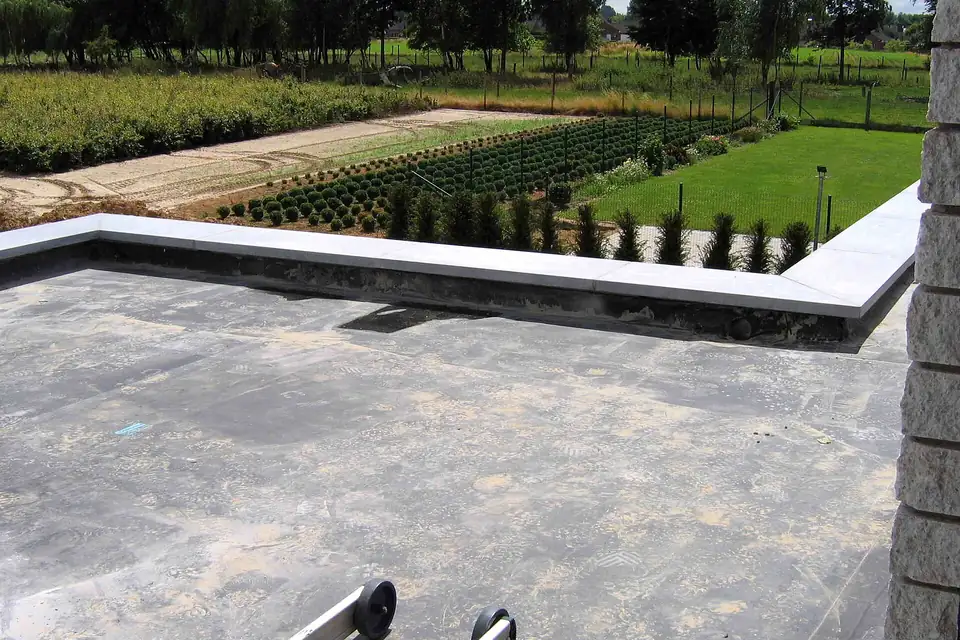
Most single-ply leaks start at seams and flashings, so the way seams are joined matters. TPO and PVC are thermoplastics: a hot-air welder melts the overlapping sheets together, and once cooled the seam is continuous material — often stronger than the sheet itself. It can be probed and tested the same day. EPDM is a thermoset rubber that cannot be welded; its seams are joined with factory-applied tape or adhesive. Modern seam tapes are reliable, but they depend more on surface preparation and workmanship, and they are the part of an aging EPDM roof that usually needs attention first.
Reflectivity and energy
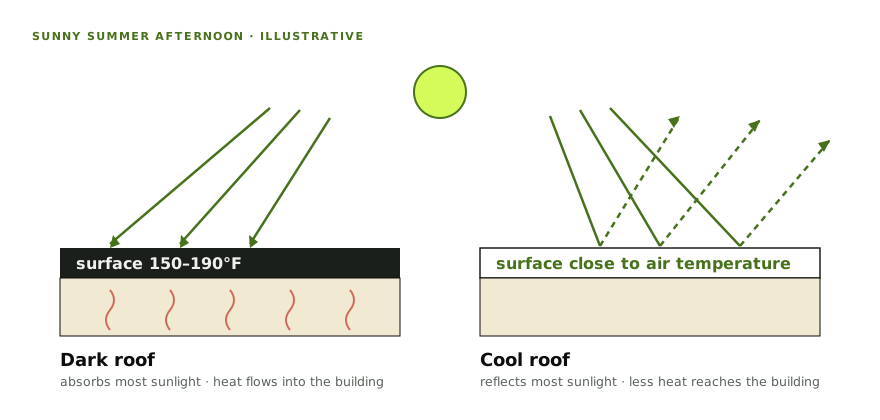
White TPO and PVC reflect most of the sun's energy, keeping the roof surface far cooler than a black roof on a summer afternoon. In hot climates that means lower cooling loads and, in many places, compliance with energy-code cool roof requirements. Black EPDM absorbs heat — a drawback in the South and Southwest, a mild advantage for snow melt and heating in the North. White EPDM exists but costs more and is less common. More on this in cool roofing.
Grease, oils and chemicals
This is where the membranes differ most. Animal fats and cooking oils from kitchen exhausts, and many industrial oils and solvents, cause EPDM to swell and soften and TPO to degrade over time. PVC — and its high-performance cousin KEE — resist a much wider range of these substances. On a building with restaurants, food production or industrial exhaust, PVC is usually worth the premium at least around the exposure. See industrial roofing.
Climate and flexibility
EPDM stays flexible at very low temperatures and tolerates building movement and hail well, which is why it has a long track record in cold regions. TPO and PVC perform well in cold climates too, but installation in freezing weather requires more care with welding and adhesives. In extreme heat and UV, thicker TPO (80 mil) and PVC hold up better than the thinnest sheets.
Durability and aging
- TPO formulations have improved significantly since the early 2000s; buy from established manufacturers and specify 60 mil as a minimum on commercial roofs.
- PVC relies on plasticizers for flexibility. Quality membranes are formulated to retain them for decades, but PVC should not be installed in direct contact with asphalt or polystyrene insulation without a separator.
- EPDM ages slowly and predictably; shrinkage at the perimeter and seam-tape aging are the typical late-life issues.
Cost
TPO and EPDM are usually close in price; PVC typically carries a premium of 15–25%. Attachment method moves all three: mechanically attached systems are cheapest, fully adhered systems cost more but perform better in wind and on complex roofs, and ballasted EPDM (where structure allows) can be the lowest-cost option of all. On most projects, the insulation, tear-off and flashings cost more than the membrane itself — see what drives commercial roof replacement cost.
How to choose
- Check the exposure. Grease, oils or chemicals on the roof? Start with PVC or KEE, at least in the affected areas.
- Check the climate. Hot and sunny: white TPO or PVC. Very cold, with no chemical exposure and budget pressure: EPDM remains a solid choice.
- Check the code. Cool roof requirements in warm climate zones may rule out a black membrane.
- Check the details. A roof crowded with equipment and penetrations benefits from welded seams and the easier detailing of thermoplastics.
- Compare warranties like for like. Same term, same NDL coverage, same membrane thickness.
Whichever membrane you choose, the installer matters more than the brand: most failures come from flashings, drains and details, not from the sheet. Want a second opinion on your roof? Tell us about the building.