
Solar roofing: energy without visual noise.
We integrate generation into the roof plane — and plan the roof and the array as one system, so neither outlives the other.
- Integrated cost
- $22–$40 / sq ft
- PV warranty
- 25+ years
- Best for
- Visible & sunny roofs
Three ways to put solar on a commercial roof
"Solar roofing" covers very different things, and choosing between them depends mostly on the roof's slope and visibility.
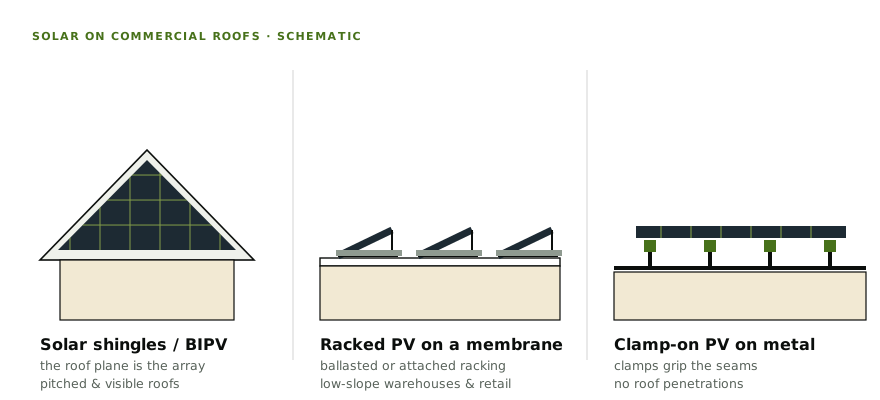
- Solar shingles and integrated PV (BIPV). Photovoltaic cells built into the roofing itself, so the roof plane is the energy system — no frames or racking on top. This is the architectural option for pitched roofs, mansards and visible roof slopes on offices, campuses, showrooms and mixed-use buildings.
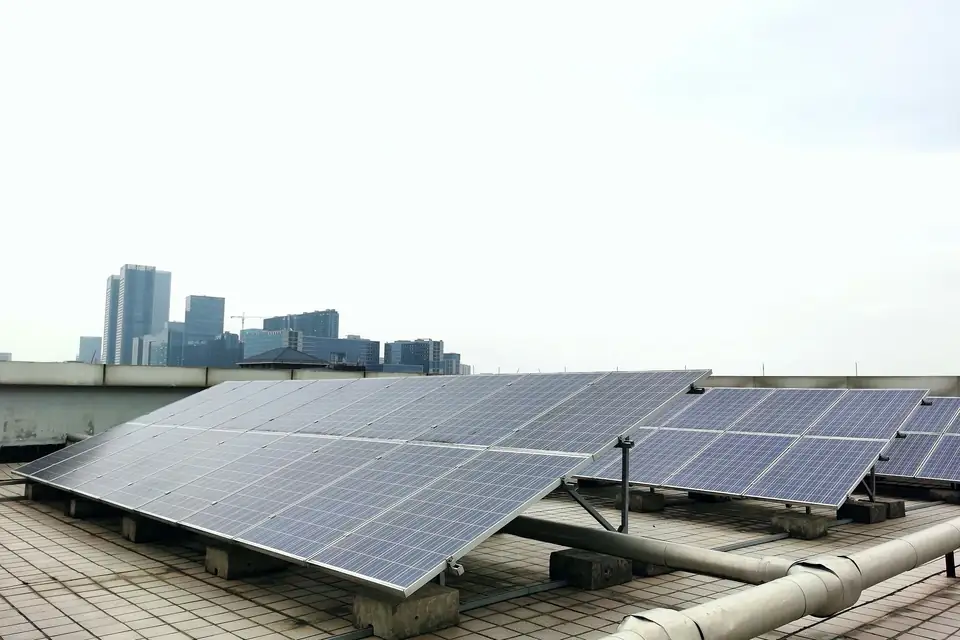
- Racked PV on a membrane roof. On low-slope roofs, conventional modules sit on ballasted or attached racking over a TPO or PVC roof. It is the most common and most economical way to generate power on warehouses and retail boxes.
- Clamp-on PV on standing seam metal. Modules attach to the seams with non-penetrating clamps — a durable, leak-free combination for long-life roofs. See standing seam metal.
Plan the roof and the array together
The single most expensive solar mistake is installing a 25-year array on a roof with eight years of life left. Removing and reinstalling modules to replace the roof later can cost a large share of the original installation. We look at both as one project:
- Roof life first. If the roof is past mid-life, replace or restore it before the array goes on.
- Structure. Ballasted systems add dead load; an engineer confirms the structure can carry it, plus snow and wind.
- Attachment and flashing. Every penetration is a future leak unless it is flashed as part of the roof system — ideally by the roofer who warrants it.
- Fire access. Fire codes require setbacks and pathways around arrays for firefighter access, which reduces usable area.
- Maintenance lanes. Drains, curbs and seams under an array still need inspecting; layouts should leave room to reach them.
Where integrated solar makes sense
Solar shingles and BIPV cost more per watt than racked panels, so they make sense where appearance has real value: a visible pitched roof, a heritage-sensitive street, a corporate headquarters, a campus with design standards. The roof has to face the sun reasonably well and be free of heavy shade from neighbors, trees or rooftop plant. On a flat warehouse roof, a racked array on a new white membrane almost always delivers more energy per dollar.
Incentives and economics
The payback of a commercial solar system depends on local electricity rates, net-metering or export rules, state and utility incentives and federal tax credits. Federal solar credits changed in 2025: eligibility now depends heavily on when construction begins and when the system is placed in service, so check current rules with a tax advisor before you budget. Accelerated depreciation and state programs can still change the math considerably.
What it costs
For integrated solar roofing, a planning range is roughly $22–$40 per sq ft of roof covered, before incentives and depending on the product, roof complexity and electrical work. Racked PV is priced per watt and is usually far cheaper per unit of energy; the roof beneath it is priced as a normal TPO or metal roof. The calculator gives an integrated-roof range for your state.
Solar roofing: common questions.
Are solar shingles used on commercial buildings?
Yes, but selectively. They suit pitched and visible roof areas — offices, campuses, showrooms, mixed-use buildings — where appearance matters. Most flat commercial roofs are better served by racked panels over a new membrane, which produce more energy per dollar.
Should I replace my roof before installing solar?
If the roof has less than roughly half its service life left, almost always. Removing and reinstalling an array to re-roof later is expensive and disruptive. A new roof under a new array means both are warranted and both age together.
Will solar panels cause roof leaks?
Not if the attachments are designed and flashed as part of the roof system. Ballasted racking avoids most penetrations on membranes, and seam clamps avoid them entirely on standing seam metal. Leaks come from improvised penetrations made without the roofer — which also tends to void the roof warranty.
Can my roof structure carry solar panels?
Many can, but it must be checked. Ballasted systems add dead load, and snow drifting around arrays adds more. A structural review is part of every solar roofing project we plan.
Are there still tax credits for commercial solar?
Federal solar incentives changed in 2025, and eligibility now depends on construction-start and placed-in-service dates. State and utility incentives vary widely. We recommend confirming current rules with a tax advisor early — they can change the project timeline.
Related systems and guides.
Thinking about solar on your roof?
Start with a roof and structure check. We will tell you whether to re-roof first, which solar approach fits, and what the combined project looks like.